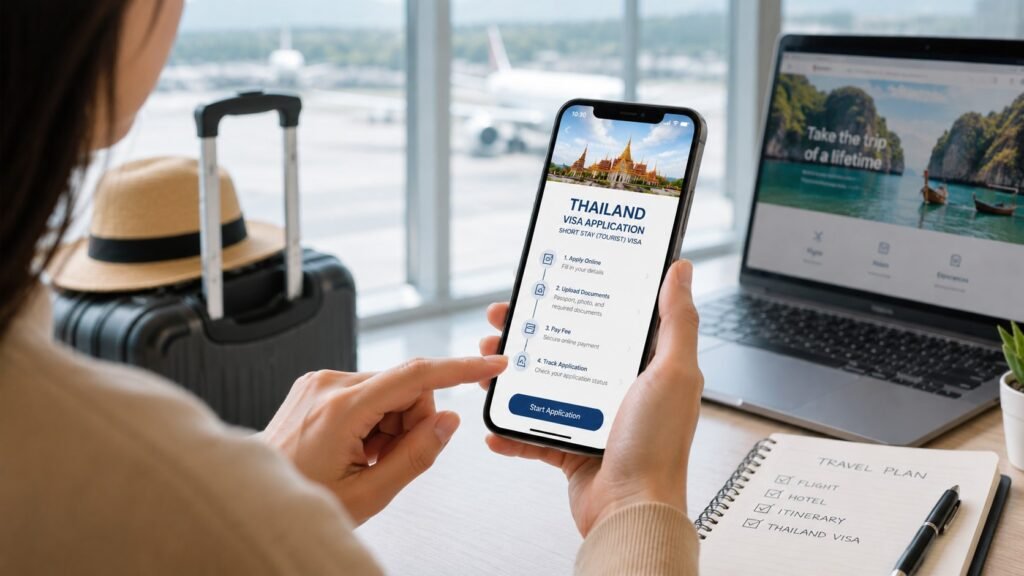
Do You Need a Visa for a Short Stay in Thailand?
It depends on your passport and how long you plan to stay. Thailand allows travelers from many countries to enter without a visa for short visits, usually between 30 and 60 days, depending on nationality and how you’re arriving. If your trip falls within that window and your country is on the exemption list, you can skip the visa application entirely and just show up with a valid passport and proof of onward travel.
But if your country isn’t on that list, or you’re planning to stay longer than the exemption allows, you’ll need to apply for a visa before you travel. This is where the online process comes in, and it’s worth understanding before you book your flights, not after.
Types of Thailand Visas for Short Stays
There are three main paths for a short trip to Thailand, and they’re not interchangeable. Picking the wrong one can mean wasted time or a rejected entry.
Thailand e-Visa (Tourist or Business)
If you don’t qualify for visa exemption, or you want a longer stay than exemption allows, the e-Visa is the standard route for short-term tourism or business visits. You apply entirely online, upload your documents, pay the fee, and wait for approval before you travel. This is the option most people mean when they search for a “Thailand visa online.”
Visa on Arrival
A small number of nationalities can apply for a visa when they land in Thailand instead of beforehand. It sounds convenient, but it usually means longer queues at the airport, cash payment in Thai baht, and less certainty than applying online in advance. It’s generally the fallback option, not the first choice.
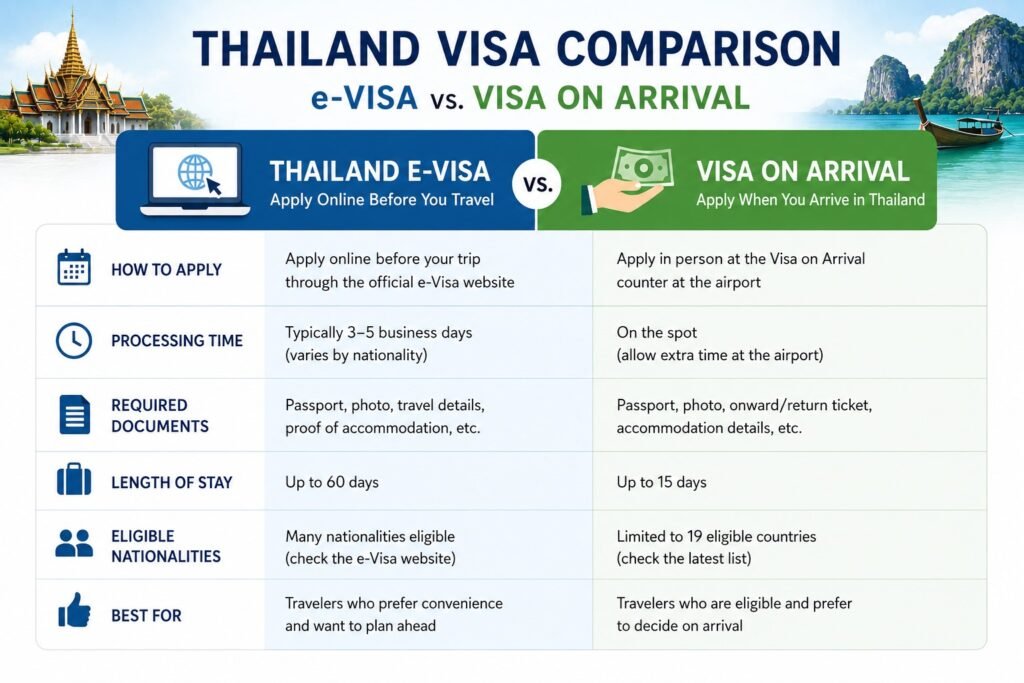
Here’s how the three compare at a glance:
| Option | Who It’s For | Typical Stay Length | Apply Online? | Cost |
|---|---|---|---|---|
| e-Visa | Most travelers needing a visa | Varies by visa type | Yes | Paid |
| Visa on Arrival | Limited nationalities | Short, fixed period | No (on arrival) | Paid, cash only |
If you’re not sure which category you fall into, check your specific nationality’s requirements before assuming either way. Visa rules change, and assuming you’re exempt when you’re not is a fast way to get turned around at check-in.
What You Need Before Applying Online
Before you start the e-Visa application, get these ready. Having everything scanned and saved ahead of time will save you from restarting the form halfway through.
- A passport valid for at least six months from your travel date, with at least one blank page
- A digital passport-style photo, usually with a plain white or light background
- Proof of onward or return travel (flight booking is normally enough)
- Proof of accommodation in Thailand, such as a hotel booking confirmation
- Proof of sufficient funds for your stay, which can be a bank statement
- A valid email address for confirmation and updates
- A debit or credit card to pay the visa fee
Small details trip people up here more than you’d expect. Photos with shadows or busy backgrounds get rejected. Bank statements that are too old or don’t match the name on your passport cause delays. It’s worth double-checking each document before you upload anything.
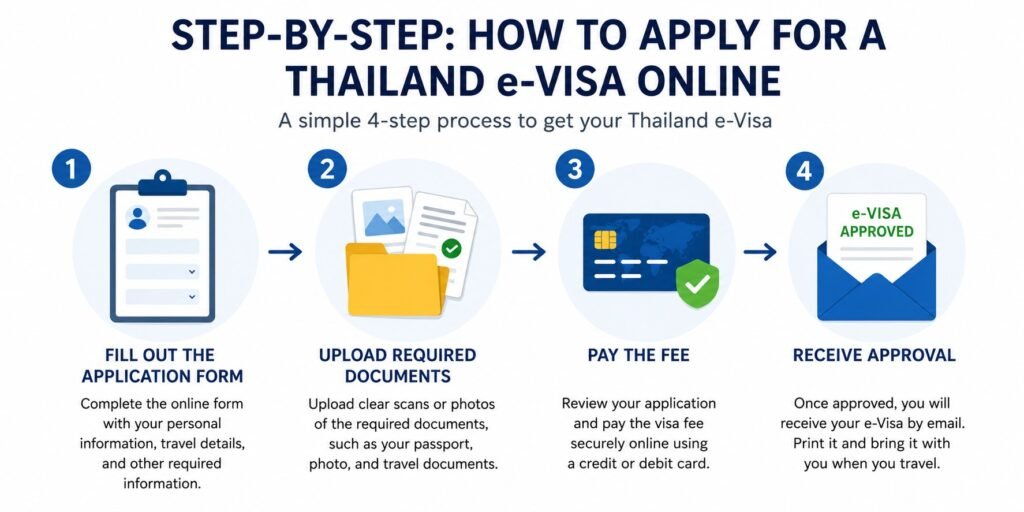
Step-by-Step: How to Apply for a Thailand e-Visa Online
- Go to the official application portal. Make sure you’re using a offcial site like royalthaiembassy.com, not a third-party service charging extra fees for something you can do yourself.
- Select your visa type. Choose the category that matches your purpose of travel, whether that’s tourism, a short business trip, or another short-stay category.
- Fill in your personal and passport details. Double-check spelling against your passport exactly as it appears, since mismatches can delay processing.
- Upload your documents. This includes your photo, passport bio page, proof of accommodation, and proof of funds.
- Pay the visa fee. Fees vary depending on visa type, so confirm the current amount on the official portal before paying.
- Submit and wait for confirmation. You’ll typically receive updates by email, and once approved, you can download your e-Visa to bring with you.
Keep a printed and digital copy of your approved visa. Immigration officers may ask to see it on arrival, and having a backup saves you from relying on spotty airport wifi.
Processing Time and Fees
Processing times vary depending on the visa type and how busy the system is at the time you apply, but most e-Visa applications take anywhere from a few business days to a couple of weeks. Applying at least three to four weeks before your trip gives you a reasonable buffer if anything needs correcting or resubmitting.
Fees also vary by visa category and are subject to change, so it’s best to confirm the exact amount directly through the official application portal at the time you apply rather than relying on a number you saw somewhere else online.
Common Mistakes to Avoid
- Applying too close to your travel date. Leaving it until the last week increases the risk that a document issue turns into a missed flight.
- Uploading a non-compliant photo. Shadows, colored backgrounds, glasses glare, or low resolution are common reasons for rejection.
- Mismatched travel dates. Your proof of accommodation and return flight should align with the dates you enter on the form.
- Weak proof of funds. A screenshot instead of an actual bank statement, or a balance that looks thin for the length of your trip, can raise questions.
- Using unofficial third-party websites. Some sites mimic government portals and charge inflated service fees for something you can do directly.
- Assuming visa exemption applies without checking. Rules differ by nationality, and assuming you’re exempt when you’re not can mean being denied boarding.
Tips for a Smooth Application
Apply well before your trip, not the week you’re supposed to fly. Read the requirements for your specific nationality rather than going off general advice, since Thailand’s visa rules aren’t identical across every country. Keep digital and printed copies of every document you submit, including your final approval. And if anything about your situation is unusual, like a layover country, a one-way ticket, or a longer stay than typical tourism, it’s worth getting clarity before you apply rather than guessing.
How the Royal Thai Embassy Can Help
If you’re unsure which visa category applies to you, or you want to confirm the current requirements for your nationality before applying, the Royal Thai Embassy is a good place to start. Checking directly with an official source before you submit anything can save you from delays caused by outdated information found elsewhere online. For document-specific questions or unusual travel situations, reaching out to the embassy directly is often faster than guessing your way through a form.
Key Takeaways
- Whether you need a visa depends on your nationality and length of stay
- The e-Visa is the standard route for most short-stay travelers who don’t qualify for exemption
- Apply at least three to four weeks before your trip to allow for processing time
- Common mistakes like photo errors and mismatched dates are avoidable with careful preparation
- Confirm your specific requirements with an official source like the Royal Thai Embassy before applying
Frequently Asked Questions
Do I need a visa to visit Thailand for a short trip?
It depends on your nationality. Many countries have visa-exemption agreements with Thailand allowing stays of 30 to 60 days without a visa. If your country isn’t on that list, or your trip exceeds the exemption period, you’ll need to apply for an e-Visa before traveling.
How long does a Thailand e-Visa take to process?
Processing typically takes anywhere from a few business days to about two weeks, depending on the visa type and current application volume. Applying three to four weeks ahead of your trip gives you a safe buffer in case of delays or document corrections.
What documents are needed for a Thailand short-stay visa?
You’ll generally need a valid passport with at least six months remaining, a passport-style photo, proof of onward travel, proof of accommodation, and proof of sufficient funds. Requirements can vary slightly depending on your nationality and visa category.
Can I apply for a Thailand visa entirely online?
Yes, the e-Visa application is done entirely online through the official portal, from document upload to fee payment. You won’t need to visit an embassy in person for most standard short-stay applications.
What happens if my Thailand visa application is denied?
If your application is denied, you’ll usually be notified of the reason, which is often tied to incomplete documents or eligibility issues. You can typically correct the problem and reapply, though it’s worth confirming next steps directly with an official source.
Conclusion
Figuring out whether you need a visa for Thailand doesn’t have to be complicated once you know which category you fall into. Check your nationality’s requirements first, gather your documents early, and apply through the official e-Visa portal with enough lead time before your trip. If anything about your situation feels unclear, the Royal Thai Embassy is a reliable place to confirm the details before you submit your application, so you can travel with one less thing to worry about.