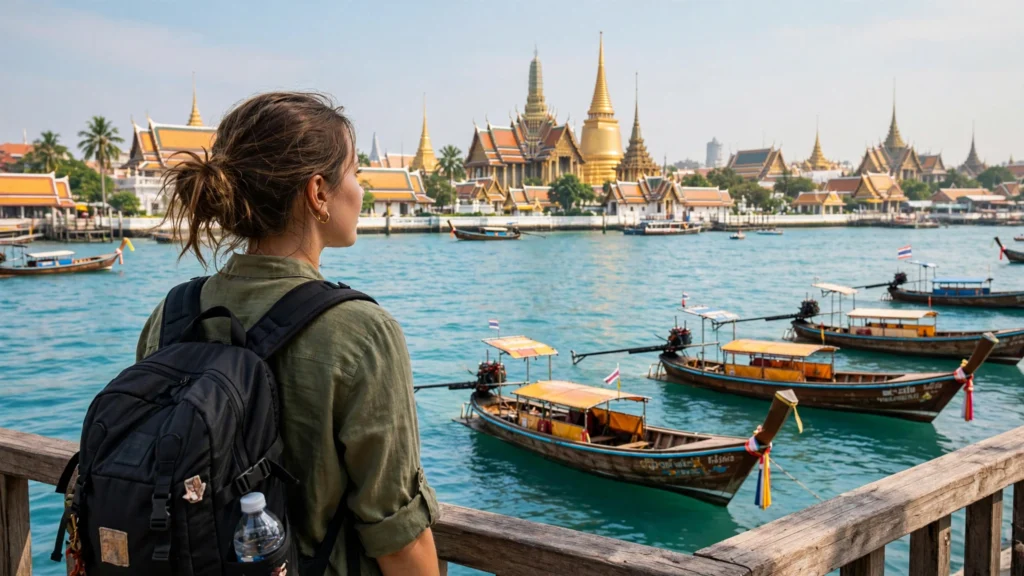
Traveling to Thailand by yourself as a woman? You’re not alone in wanting to do this. Thousands of women travel to Thailand solo every year, and most have a wonderful time. But before you pack your bags, there are two things you need to sort out: your visa paperwork and your safety plan.
This guide walks you through both. We’ll keep it simple and clear, so you know exactly what to do before you fly and while you’re there.
Do You Need a Visa to Visit Thailand?
This is the first question to answer, and it depends on where you’re from.
Some travelers don’t need a visa at all for short trips. Under Thailand’s Visa Exemption program, people from countries like the United States, United Kingdom, Canada, Australia, New Zealand, Germany, France, Japan, and South Korea can enter for tourism without applying for anything ahead of time, as long as the stay is short.
If you’re not from one of those countries, you’ll likely need a Thailand eVisa. This is an online visa you apply for before you travel. Thailand started this online system on January 1, 2025, which made the whole process a lot easier than the old paper method.
There are two eVisa types to know about:
Single Entry eVisa (SEV) This visa is good for 3 months from the day it’s issued. It lets you stay in Thailand for up to 30 days. Need more time? You can apply for a 30-day extension once you’re already in the country, at a local immigration office.
Multiple Entry eVisa (MEV) This one lasts 6 months and lets you leave and come back as many times as you want during that period. Each visit allows a stay of up to 60 days, and you can extend that by another 30 days if needed.
If you’re planning one trip to Thailand and then heading home, the Single Entry visa is probably enough. If you think you might hop over to a nearby country and come back, or you’re not sure of your exact plans yet, the Multiple Entry visa gives you more room to change your mind.
You can read more about how the multiple entry visa works, or check out the full 30-day visa rule if you want to understand exactly how long you’re allowed to stay.
What Documents Do You Need?
Before you apply, get these ready:
- The photo page of your passport
- A recent photo of yourself (taken in the last 6 months)
- Proof of where you currently are
- Your flight booking or travel confirmation
- Proof of where you’ll be staying in Thailand (a hotel booking works)
If you’re a student or planning to work in Thailand, there are a few extra documents required too, like proof you have enough money for your trip. You can see the full document checklist to make sure you have everything ready before you start your application. There’s also a step-by-step document checklist if you want to double check nothing’s missing.
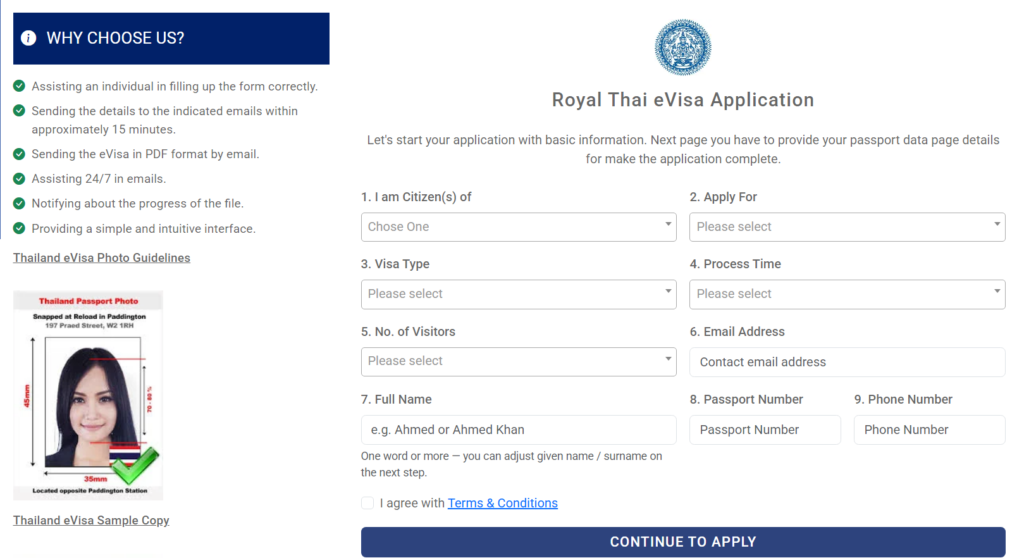
One more thing that trips people up: your visa photo. Thailand has specific rules about how this photo needs to look, and if you get it wrong, it can slow things down. It’s worth reading the photo requirements guide before you snap your picture.
How Long Does the eVisa Take?
Most eVisa applications take 3 to 5 working days to process. If you’re in a hurry, you can pay for urgent processing, which can get your visa approved in less than 3 working days.
Here’s a small detail that matters: if you submit your application after 12:00 PM Thailand time, it won’t start processing until the next working day. So don’t wait until the last minute.
Give yourself plenty of buffer time before your flight. A good rule is to apply at least two to three weeks before you plan to travel, just in case something needs fixing. You can read more about processing times and how to avoid delays so your visa is ready well before takeoff.
What Happens If You Make a Mistake on Your Application?
Mistakes happen, especially on a form you’ve never filled out before. The good news is that applications get checked for errors before they’re sent to Thai immigration, and support is available if something needs fixing. If you want extra help getting it right the first time, look at the best way to get a Thai eVisa for tips on avoiding common slip-ups.
Now Let’s Talk About Safety
Once your visa is sorted, it’s time to think about staying safe. Thailand is one of the most popular solo travel destinations in the world, and for good reason. It’s welcoming, easy to get around, and full of other solo travelers, including many women. But like any place you’ve never been before, it helps to use good judgment and plan ahead.
Here’s what to know.
Pick Safe Places to Stay
Choose accommodation in areas that are well-lit, busy, and easy to reach. Hostels with female-only dorms are a popular choice for solo women, since you’ll be sharing a room with other female travelers instead of strangers of any gender. Read reviews before booking, and pay attention to what other solo women say about the neighborhood, not just the room itself.
If you’re not sure where to stay, this guide to cheap places to stay in Thailand can help you find options that are both affordable and in good areas.
Getting Around Safely
Thailand has lots of transport options: taxis, tuk-tuks, buses, trains, and ride-hailing apps like Grab. A few tips:
- Use ride-hailing apps when you can. They show the driver’s name, photo, and license plate, and they track your route, which adds a layer of safety.
- If you take a tuk-tuk or regular taxi, agree on the price before you get in, or make sure the meter is running.
- For overnight buses or trains, book with well-known companies and keep your bag close to you.
- Avoid walking alone late at night in unfamiliar areas, especially if you’ve been drinking.
Nightlife and Drinking
Thailand has a lot of nightlife, and it’s totally fine to enjoy it. Just use the same common sense you would anywhere else in the world:
- Watch your drink being made, and don’t leave it unattended.
- Go out with people you trust, or stay in groups when you can, even if that means teaming up with other travelers you meet along the way.
- Have a plan for getting home before you start drinking, not after.
Dress and Local Culture
Thailand is a warm country, and it’s tempting to dress for the beach everywhere you go. But when visiting temples or more traditional areas, it’s respectful to cover your shoulders and knees. Many temples will actually turn you away or hand you a wrap-around cloth if you’re not dressed appropriately.
In tourist hotspots like Bangkok, Phuket, or Chiang Mai, casual clothing is completely normal. Just pack a light scarf or shawl you can throw on for temple visits.
Trust Your Instincts
This might be the most important tip of all. If a situation feels off, whether it’s a person, a place, or a “deal” that seems too good to be true, it’s okay to walk away. You don’t owe anyone politeness at the cost of your own comfort. Most people you meet in Thailand will be kind and helpful, but it’s fine to be a little more careful with strangers than you would be at home, just like you would in any new city.
Common Mistakes to Avoid
- Waiting too long to apply for your visa. Since processing takes several working days, applying last minute can mean your visa isn’t ready in time.
- Not saving copies of your documents. Keep digital and paper copies of your passport, visa, and insurance separate from the originals, just in case something gets lost.
- Skipping travel insurance. It’s an easy thing to forget, but it matters if you get sick, hurt, or need to change your plans.
- Not telling anyone your plans. Share your itinerary with a friend or family member back home, and check in with them regularly.
- Assuming every area is the same. Busy tourist areas and quiet rural spots can feel very different at night. Get a sense of a new place in daylight before exploring after dark.
What to Do in an Emergency
Thailand has a tourist police service specifically set up to help visitors, separate from the regular police. If you’re ever in a situation where you need help, they’re a good first call, and many officers speak English.
It’s smart to save these before you travel:
- The contact number for your country’s embassy in Thailand
- Your travel insurance company’s emergency line
- The address of your accommodation, saved in Thai, in case you need to show it to a taxi driver
Quick Checklist Before You Go
Here’s everything in one place:
Visa and documents
- Check if you need an eVisa
- Passport valid for at least 6 months from your arrival date
- Recent photo, travel booking, and accommodation proof ready
- Applied for your eVisa with plenty of time before your trip
Safety prep
- Accommodation booked in a safe, well-reviewed area
- Travel insurance sorted
- Copies of your documents saved digitally and on paper
- Itinerary shared with someone back home
- Emergency numbers saved in your phone
Ready to Apply?
Once you know which visa fits your trip, the process itself is simple. You can start your Thailand eVisa application online, and if you want to understand each step first, this step-by-step application guide walks you through exactly what to expect.
Traveling solo as a woman doesn’t have to feel scary. With the right visa in hand and a little bit of common sense, Thailand can be one of the easiest and most rewarding places to explore on your own.