
Getting your Thailand eVisa rejected is more common than you’d think. And the worst part? Most rejections happen because of small, fixable mistakes. A blurry photo. A typo in a passport number. The wrong document format.
The good news is that none of these are hard to avoid. You just need to know what to look for before you hit submit.
Thailand moved to a fully digital visa system on January 1, 2025. There are no more paper forms or passport stickers. You apply online, get a PDF with a QR code, and show that at the airport. The process is fast when everything is correct. When it is not, you lose your fee and start over.
This guide covers every common reason applications get rejected and exactly what you can do to make sure yours is not one of them.
Why Thailand eVisa Applications Get Rejected
Thailand’s eVisa system uses automated checks before a human officer ever looks at your file. That means if your photo or documents do not meet the technical requirements, the system can flag your application right away. You will not always get a detailed explanation either. Often you just get a rejection email.
Here are the most common reasons it happens.
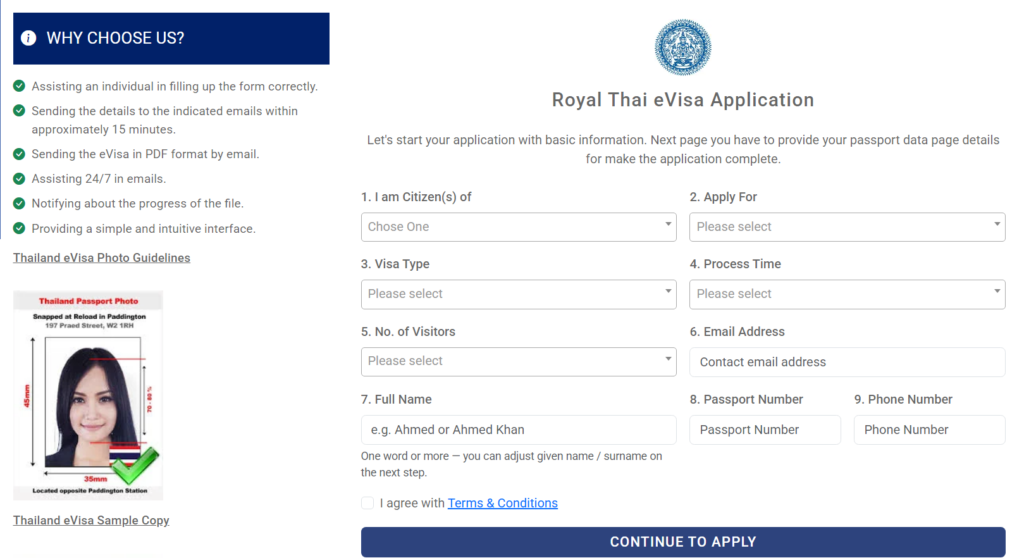
1. Your Passport Is Not Valid Long Enough
This is one of the biggest reasons for rejection and it is easy to miss.
Your passport must be valid for at least six months from the date you plan to arrive in Thailand. Not six months from today. Six months from your arrival date.
So if you plan to fly to Bangkok on October 1, your passport needs to be valid until at least April 1 of the following year. If it expires before that, your application will be rejected.
Your passport also needs at least two blank pages. Immigration officers need space to stamp it when you arrive.
Check both of these before you do anything else. If your passport is close to expiring, renew it first. Learn more about passport validity requirements for Thai eVisa applicants.
2. Your Photo Does Not Meet the Requirements
The photo is where a lot of applications break down. Thailand’s system uses automated checks on uploaded photos. If your photo does not pass those checks, the application will not move forward.
Here is what the photo needs to look like:
- Plain white or light-colored background
- Your full face visible, looking straight at the camera
- No glasses, hats, or anything covering your face
- Good, even lighting with no shadows across your face
- Recent photo that looks like you today
The most common photo mistakes are dark backgrounds, shadows, and photos that are too blurry or too small. Do not use a selfie. Do not crop a photo from a group picture.
If you are not sure your photo meets the requirements, read the Thai eVisa photo requirements guide before uploading.
3. Your Documents Are Blurry or Cut Off
Thailand’s system scans uploaded documents automatically. Blurry scans, dark images, or documents with cut-off edges will get flagged.
When scanning your passport, make sure:
- Every corner of the data page is visible
- The text is sharp and easy to read
- The file is in the correct format (PDF or JPEG, depending on what the form asks for)
- The file size is within the allowed limit
If you are using your phone to scan, use a scanner app like Adobe Scan or Microsoft Lens. These apps flatten the image and improve sharpness. A regular photo taken in bad lighting often is not clear enough.
4. Your Information Does Not Match Your Passport
This one trips people up more than you would expect.
Everything you type in your application must match exactly what is printed in your passport. Your name, date of birth, passport number, nationality, and expiry date all need to be correct.
If your passport says “MUHAMMAD” but you type “MOHAMED,” that is a mismatch. If you enter your birth year wrong by one digit, that is a rejection.
Do not use autofill on your browser. Autofill pulls saved data from your device, which may be outdated or formatted differently. Type every field manually and check each one against your actual passport.
When you are done, read it all again. Then ask someone else to check it too.
5. You Picked the Wrong Visa Type
Thailand has more than one type of visa. Picking the wrong one is a common mistake.
Most tourists need a Tourist Visa (TR). This covers vacations, sightseeing, and short medical visits. It comes as a Single Entry or Multiple Entry visa.
If you plan to work, study, or stay long-term, you need a different visa category. Applying for a tourist visa when your purpose is work or study is a reason for rejection.
Make sure you are applying for the right visa before you start. If you are not sure which one you need, the Thailand eVisa process explained guide breaks down the different types clearly.
6. Your Financial Proof Is Missing or Weak
You need to show that you have enough money to cover your trip. This usually means recent bank statements.
The statements should show consistent activity, not a large deposit made the day before you applied. Officers look for that pattern and it raises a red flag. Show at least three months of statements if you can.
The bank statements need to be recent, clearly show your name and account number, and cover the period of your planned stay in Thailand. Find out exactly what counts as acceptable financial proof for a Thai eVisa.
7. Your Travel Proof Is Incomplete
You need to show confirmed travel plans. This means a booked flight into Thailand and proof of accommodation for at least your first night.
A flight itinerary without a booking confirmation is not enough. You need a confirmed reservation that shows your name, flight number, dates, and ticket number.
Same with your accommodation. A screenshot of a hotel listing is not enough. You need a booking confirmation with your name and dates on it.
If you are staying with friends or family, a letter from the host and their ID copy may be required. Check the Thailand visa document checklist for the full list of what is needed.
8. You Applied Too Late
The standard processing time for a Thailand eVisa is 3 to 5 working days. That does not include weekends or Thai public holidays.
If you apply on a Friday and there is a holiday the following week, you could wait longer than you expected. During peak travel season from November to February, processing times can stretch even further.
Apply at least two to three weeks before your trip. That gives you time to fix any issues if something goes wrong. See current Thailand eVisa processing times before you plan your submission date.
Pre-Submission Checklist
Before you click submit, go through this list:
- Passport valid for at least 6 months from your arrival date
- At least 2 blank pages in your passport
- Biometric photo on a white/light background, no shadows, no glasses
- All documents scanned clearly with no cut-off edges
- Name, passport number, date of birth, and expiry date match your passport exactly
- No browser autofill used, everything typed manually
- Correct visa type selected for your purpose of travel
- Bank statements from the last 3 months uploaded
- Confirmed flight booking with your name and ticket number
- Confirmed accommodation booking for at least your first night
- Applying at least 2 to 3 weeks before your travel date
If everything on this list is confirmed, your application is in good shape.
What to Do If Your Thailand eVisa Gets Rejected
Getting rejected is frustrating, but it is not the end.
First, read the rejection reason carefully. The email will usually tell you what went wrong, even if it is brief. Common reasons include missing documents, photo issues, or information mismatches.
Fix the problem before you reapply. If you submit again with the same mistake, you will get rejected again and lose the fee a second time.
The visa fee is non-refundable. This applies whether your application is approved, rejected, or cancelled. That is why it matters to get it right the first time.
Once you have fixed the issue, you can reapply. There is no automatic waiting period, but make sure you have enough time before your travel date. Check the eVisa fees so you know what to budget for a second application.
If you want help reviewing your documents before you reapply, Royal Thai Embassy can walk you through the process at royalthaiembassy.com.
Frequently Asked Questions
What are the most common reasons a Thailand eVisa gets rejected?
The most common reasons are passport validity issues, poor-quality photos, blurry document scans, information that does not match the passport, wrong visa type, missing financial proof, and incomplete travel bookings.
Can I reapply after a Thailand eVisa rejection?
Yes. You can reapply after fixing the issue that caused the rejection. The fee is non-refundable, so you will need to pay again.
How long does it take for a Thailand eVisa to be approved?
Standard processing takes 3 to 5 working days. This does not include weekends or Thai public holidays. Apply well in advance to avoid delays.
Is the Thailand eVisa fee refundable if my application is rejected?
No. The fee is non-refundable regardless of the outcome.
Do I need to print my Thailand eVisa?
The Thailand eVisa is digital. You will receive a PDF with a QR code. It is a good idea to keep a printed copy as a backup in case of tech issues at the airport.
What travel documents do I need to apply?
You need your passport, a biometric photo, confirmed flight booking, accommodation proof, and recent bank statements. See the full royal Thai embassy visa documents list for details.
Ready to Apply?
If you have been through this guide, you are in a much better position than most applicants. Take your time, check each document carefully, and do not rush the submission.
Royal Thai Embassy can help you get through the process without the guesswork. Start your application at royalthaiembassy.com.