
The short answer is: not really — at least not while you’re still inside Thailand.
Most long-term visa categories require you to leave the country and apply at a Thai embassy. You cannot simply walk into an immigration office and “upgrade” your tourist visa to a retirement visa or a work-based visa on the spot. It doesn’t work that way.
That said, you do have real options. Some depend on how much time you have left on your current visa. Others depend on what you want to do in Thailand long-term. This guide walks through all of them clearly so you can figure out your next move.
What Is a Thai Tourist Visa?
A Thai tourist visa (also called a TR visa) lets you visit Thailand for tourism purposes. Depending on which type you applied for, it may give you 30, 60, or up to 90 days to stay in the country.
If you applied online before your trip, you likely used Thailand’s eVisa system, which now handles single and multiple entry tourist visas. The 60-day tourist visa is one of the most popular options for travelers who want more time to explore.
But what happens when that time starts running out and you want to stay longer — not just for a few more weeks, but long-term?
Can You Extend a Tourist Visa Without Leaving Thailand?
Yes, this part you can do without leaving.
Thai Immigration allows tourists to apply for a 30-day extension while still inside the country. You go to a local immigration office, bring your passport and required documents, pay a small fee, and if approved, you get 30 more days added to your stay.
This is not the same as converting your visa. You’re still on a tourist visa. You’re just buying a little more time.
If that’s all you need, check out the full guide on how to extend your Thai tourist visa by 30 days.
What About “Change of Type” — Is That a Real Thing?
Yes, it’s a real process. But it’s not as simple as it sounds.
A “change of type” means switching from one visa category to another while you’re still in Thailand. In theory, you could apply to change from a tourist visa (TR) to a non-immigrant visa (like the O or B category) at the Immigration Bureau in Bangkok.
In practice, most immigration officers will tell you to leave the country and apply for the new visa at a Thai embassy abroad. Change of type applications inside Thailand are approved on a case-by-case basis and are far from guaranteed. The process is also more complex, requires more documentation, and takes longer than just going to a nearby country and applying fresh.
Unless you have a very specific situation and are working with an immigration lawyer, the easier and more reliable path is to leave Thailand, apply for the visa you actually want at a Thai embassy or consulate, and re-enter.
What Long-Term Visa Options Do You Actually Have?
Here’s a simple breakdown of the main long-term visa types and who they’re for.
| Your situation | Visa to look into |
|---|---|
| You want to retire in Thailand | Non-Immigrant OA (Retirement Visa) |
| You want to work remotely or run a business | LTR Visa or Non-Immigrant B |
| You’re married to or the parent of a Thai national | Non-Immigrant O (Family) |
| You want to study Thai or attend school | Non-Immigrant ED (Student Visa) |
| You want flexible long-stay access without working | Thailand Elite / Thailand Privilege Card |
Each of these has its own requirements, fees, and application steps. Here’s what you need to know about each one.
Non-Immigrant OA: The Retirement Visa
This is one of the most common routes for foreigners who want to live in Thailand long-term. You need to be 50 years old or older.
Financial requirements apply. At the time of writing, you typically need to show proof of funds in a Thai bank account or a combination of monthly income and savings. The exact figures can change, so always confirm the current requirements directly with the Thai Immigration Bureau (immigration.go.th) or the nearest Royal Thai Embassy in your home country before applying.
The OA visa is issued outside Thailand. That means you need to apply at a Thai embassy or consulate in your home country or another country where you’re a legal resident.
LTR Visa: The Long-Term Resident Visa
Thailand launched the LTR Visa to attract remote workers, retirees with passive income, and investors. It offers a 10-year stay (renewable) and comes with benefits like fast-track immigration lanes and the ability to work remotely for foreign companies legally.
To qualify, you need to meet income thresholds and fall into one of the approved categories: wealthy global citizens, wealthy retirees, work-from-Thailand professionals, or highly skilled professionals. The Board of Investment (boi.go.th) manages this program.
This is a strong option if you meet the income requirements and want stability. It’s not aimed at the average tourist.
Non-Immigrant O: For Family of Thai Nationals
If you’re married to a Thai citizen or have a Thai child, you may qualify for a Non-Immigrant O visa. This is applied for outside Thailand at a Thai embassy abroad.
Once you have the Non-Immigrant O, you can apply for a one-year extension inside Thailand through the Immigration Bureau, as long as you continue to meet the requirements.
Non-Immigrant ED: Student Visa
If you plan to study in Thailand — whether that’s Thai language school, a university program, or a certified training course — the ED visa is the route to take.
You apply for this visa outside Thailand after getting an acceptance letter from a Thai institution. Royal Thai Embassy has a guide on how to get a student visa through the Royal Thai Embassy that walks through the process.
Thailand Elite / Thailand Privilege Card
This is a paid membership program run by the Thai government. Members get long-stay visas (ranging from 5 to 20 years depending on the tier) with visa runs handled for them and access to airport perks.
It’s not cheap. Entry-level packages start at several thousand US dollars. But for people who want hassle-free long stays without meeting income or retirement age requirements, it’s an option worth knowing about.
What Happens If You Overstay?
Do not overstay your visa while waiting to figure this out.
Thailand takes overstaying seriously. If you stay past your permitted date, you’ll be fined for every day you overstayed. Long overstays can result in a ban from re-entering Thailand. That would make applying for a long-term visa much harder.
If your tourist visa is running out and you’re not sure what to do, your safest moves are:
- Apply for the 30-day in-country extension to buy more time
- Do a border run to a neighboring country and re-enter on a visa exemption or tourist visa (this is not a long-term fix, but it gives you time to apply properly)
- Leave Thailand and apply for the correct long-term visa at a Thai embassy in your home country
What Should You Do First?
It depends on how much time you have left.
If you have more than 7 days left: Look into the 30-day extension first. It’s the simplest short-term move. Meanwhile, research which long-term visa fits your situation using the table above.
If you have less than 7 days left: Prioritize leaving before your visa expires. Overstaying even a few days creates problems. You can cross into a neighboring country, then apply for the long-term visa you want from there — or return to your home country to do it properly.
If you’re still planning your trip: The best time to think about this is before you go. Starting with the right tourist visa gives you more time and flexibility once you arrive.
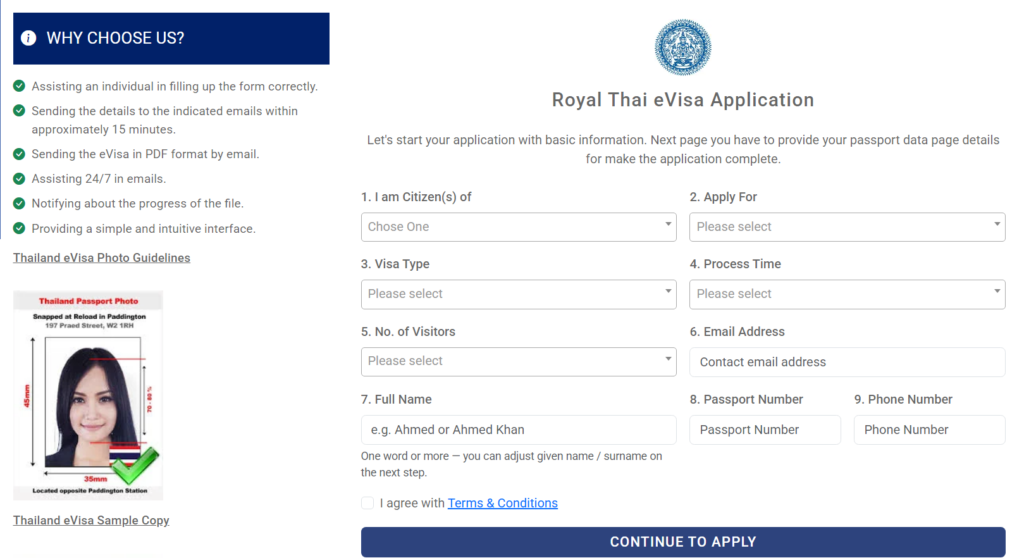
How Royal Thai Embassy Can Help
If you’re still planning your trip to Thailand and haven’t sorted your tourist visa yet, Royal Thai Embassy makes the application process simple. You can apply for a Thailand eVisa online, get help checking your documents, and receive your approved visa by email before you travel.
Starting your trip with the right visa already in place is the easiest way to avoid visa stress down the road.
Apply for your Thailand eVisa here and make sure you have everything you need before you fly.
Frequently Asked Questions
Can I convert my Thai tourist visa to a retirement visa without leaving Thailand? In most cases, no. The Non-Immigrant OA (retirement visa) must be applied for outside Thailand at a Thai embassy or consulate. You’ll need to leave the country to apply.
Can I extend my tourist visa at a local immigration office? Yes. Thailand’s Immigration Bureau allows one 30-day extension on a tourist visa. You apply in person at an immigration office with your passport and supporting documents.
What is the easiest long-term visa to get in Thailand? That depends on your situation. The Non-Immigrant OA is accessible for those over 50 who meet the financial requirements. The Thailand Elite / Privilege Card is available to anyone who can pay the membership fee.
What happens if I overstay my tourist visa in Thailand? You’ll be fined per day of overstay. Longer overstays can result in a ban on re-entering Thailand. Avoid overstaying at all costs.
Can I do a border run and come back on a tourist visa indefinitely? Border runs are a short-term workaround, but Thai immigration has the authority to deny entry if they believe you’re trying to live in Thailand on repeated tourist visas. It’s not a long-term solution.
Where do I apply for a Thai Non-Immigrant visa? At a Thai embassy or consulate outside Thailand, either in your home country or in a country where you have legal resident status. Some non-immigrant categories can then be extended inside Thailand once you’ve entered on the correct visa.